

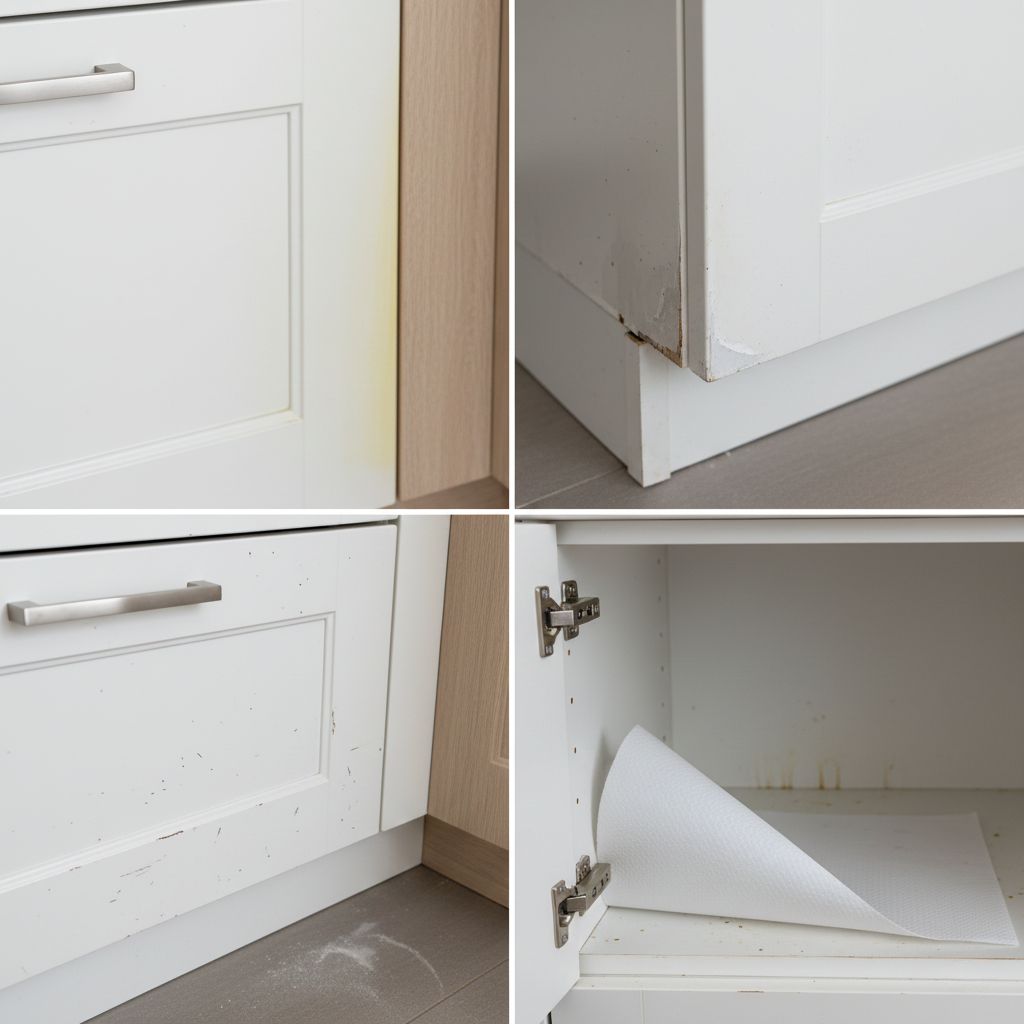
When it comes to cabinetry, the finish is everything, until it fails. Around year two, homeowners often call us with the same frustrating issues: yellowing whites, peeling paint near sinks, scuffed lower cabinets, and sticky interiors that refuse to clean up. No matter how pretty the design initially looks, these failures point to a deeper problem: low-quality materials and improper sealing.
A beautiful finish is meaningless if it doesn’t last in real life. That’s why we guide clients toward durable, moisture-resistant coatings from the start. Here’s a look at the most common finish failures, and how to avoid them completely.
1. Yellowing White Cabinets
Why It Happens
- Inadequate primers or low-cost paints without UV inhibitors
- Natural sunlight causes accelerated yellowing
- Thermofoil and white laminate degrade over time, changing hue
Symptoms to Watch For
- Warm or creamy tone replacing bright white
- Discoloration more obvious at edges or exposed fronts
- Uneven aging across surfaces
How to Prevent It
- Use premium cabinet-grade paints with UV protection
- Apply a clear enamel topcoat to maintain gloss and reflectivity
- Choose raw maple or oak doors with quality finishing over thermofoil
- Ask about warranties on long-term color stability
2. Paint Peeling Around Sinks & Dishwashers
Why It Happens
- Moisture from steam and splashes breaks down paint edges
- Improper seals and lack of moisture-resistant coating
- Cabinets installed before finishing, leaving gaps unsealed
What You’ll See
- Flaking or bubbling at door seams and base edges
- Softened cabinet walls or swollen seams
- Paint directly touching unprimed wood or MDF
Prevention Strategies
- Use moisture-resistant primers and semi-gloss enamel paints
- Seal all seams with silicone or mildew-resistant caulking before installation
- Recoat around water zones post-installation
- Routinely inspect and reseal every 12–18 months
3. Chipping & Wear on Lower Cabinets
Why It Happens
- Hard foot traffic near toe kicks and base edges
- Scraping from vacuum cleaners and appliances
- Undersized doors with no edge protection
How Wear Shows Up
- Flaked edges, chipped paint, and exposed board
- Scratches in lower panels
- Daily use accelerates deterioration
Preventive Measures
- Fully seal and finish bottom edges before installation
- Install stainless steel or PVC kickplate protectors
- Opt for abrasion-resistant topcoats
- Encourage gentle cleaning and maintain mats near entryway
4. Sticky or Stain-Prone Interiors
Why It Happens
- Interior faces often skipped during finishing
- Porous materials absorb spills and grease
- No protective sheen makes cleaning challenging
Identifying the Issue
- Persistent food stains that linger
- Gloss finish dulls unevenly after cleaning
Best Practices for Prevention
- Finish interiors with durable enamel to create a wipeable surface
- Use low-VOC, water-resistant coatings
- Recoat interiors after initial use to reinforce the seal
- Who can resist cabinet liners in cooking zones?
Why Material Quality Matters
Choosing the right substrate makes a world of difference.
- MDF & plywood: Dense and stable, holds paint and handles moisture well
- Particle board: Prone to swelling and delamination
- Thermofoil/laminate: Peels and yellows over time, especially around heat
Finishes need a solid foundation. Choose high-quality materials first, then finish well.
Our Durable-Finish Checklist
To ensure finishes last, follow this proven system:
- Select materials: Plywood or MDF over particle board
- Prime: Use bonding primer specifically for cabinetry
- Enamel coats: Apply 2–3 coats of quality enamel, semi-gloss or gloss depending on aesthetic
- Edge protection: Seal all edges with clear urethane
- Seal moisture zones: Use silicone caulking around water areas
- Final inspect: Reconfirm all seams are sealed before installation
- Maintenance reminder: Provide care guidelines and inspection tips for homeowners
Real Examples We’ve Seen
- First call at year two: “Why are my whites turning cream?” – A cabinet-grade touch-up and UV topcoat fixed it.
- Homeowner complaint year three: Paint peeling near dishwasher – Caulk failure identified and resealed with silicone.
- Tenant report year four: Cabinets chipping near toe kick – A stainless steel kickplate solved the problem and improved durability.
These stories highlight that prevention saves time, frustration, and money.
Beautiful Can Last, When Done Right
A stunning kitchen built correctly withstands time and use. By selecting resilient materials and protecting high-risk zones, you avoid the stress of finish failure. That sense of luxury and durability endures, not fades.