

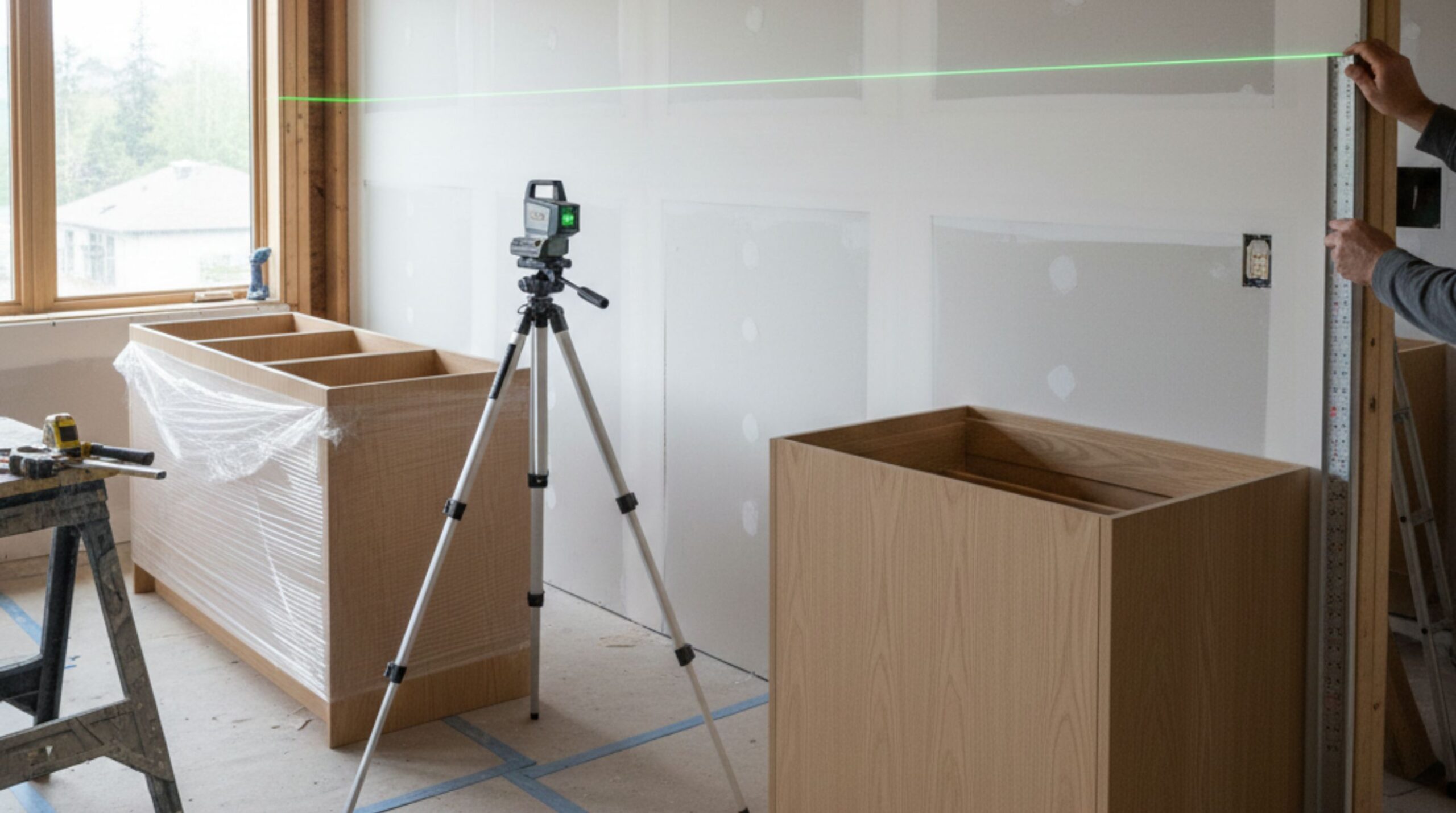
Technology has changed construction. Lasers, 3D scans, and digital renderings give us speed, precision, and clarity that didn’t exist years ago. At DOCI, we use all of it. But when it comes to measurements, there’s one rule we never break.
Every critical measurement gets checked by a human.
Because tools can tell you what a wall measures. They can’t tell you how that wall behaves.
And that difference is what separates clean installs from constant adjustments.
What Technology Does Well — and Where It Stops
Laser measurements are incredibly accurate. They can tell you a wall is 121 ⅝ inches long, instantly and repeatedly. Digital models help visualize layouts before anything is built. Renderings allow clients to see how a space might look long before materials arrive.
All of that matters. It speeds up planning and reduces guesswork.
But construction doesn’t happen in perfect digital environments. It happens in real buildings with real imperfections.
Walls bow. Floors slope. Ceilings dip. Trim flares. Corners aren’t square. And none of that shows up in a clean digital number.
The Difference Between Measuring and Understanding
A laser gives you data. Experience gives you context.
An experienced installer doesn’t just ask, “What’s the measurement?” They ask:
Where is that measurement tight?
Where does it open up?
Is the wall straight from floor to ceiling, or does it drift?
Is that ceiling level, or does it sag toward one side?
Those details matter when you’re installing cabinets, millwork, or anything that needs to land cleanly against another surface.
A cabinet built to a perfect number will still fail if the room isn’t perfect. And no room ever is.
Where Digital Measurements Fall Short
Here’s what technology alone can miss:
A baseboard that flares outward just enough to push cabinets proud
A ceiling that drops half an inch across a run
A corner that looks square but isn’t
A wall that’s straight at eye level and warped near the floor
None of these show up in a simple scan. But all of them show up during installation.
That’s when problems start if no one caught them early.
Why Judgment Is the Real Safeguard
Judgment is knowing when to trust the number — and when to question it.
It’s recognizing that a cabinet needs breathing room even if the drawing says it fits. It’s adjusting layouts to account for real-world tolerances. It’s catching issues before materials are ordered, not after they arrive.
Those judgment calls are built on repetition. On having seen the same issues hundreds of times before. On knowing how small deviations compound once multiple trades touch the same space.
That experience is what keeps installs clean.
How Double-Checking Protects the Install
When measurements are reviewed by humans, problems get solved early.
Cabinets get adjusted before they’re built. Filler panels are planned intentionally instead of reactively. Clearances are protected. Reveals stay consistent. Doors open without binding. Trim lines land where they should.
The install becomes execution, not correction.
That’s the difference between a project that moves smoothly and one that stalls while everyone figures out how to fix what should’ve been caught earlier.
Why We Don’t Rely on One System Alone
We don’t believe in choosing between technology and experience. We use both.
Technology speeds us up. It gives us confidence in the broad strokes. It allows better planning and communication.
But humans make sure it’s right.
They notice the details that tools can’t interpret. They apply judgment where numbers stop. They protect the work before mistakes become expensive.
That layered approach is intentional. It’s slower upfront. And it saves time everywhere else.
Clean Results Start Before Install Day
Most people think clean installs happen on install day. They don’t.
They happen during measurement. During review. During the moment someone pauses and says, “This number is right, but the room isn’t.”
That pause is everything.
It’s what keeps cabinets flush. It’s what keeps reveals tight. It’s what prevents last-minute changes that throw schedules off.
And it’s why we never skip the human check.
The Bottom Line
Lasers measure. Models visualize. Software organizes.
But judgment decides.
Technology helps us move faster. People make sure we move correctly.
That’s how we keep installs clean. And that’s why every measurement still gets checked by hand.